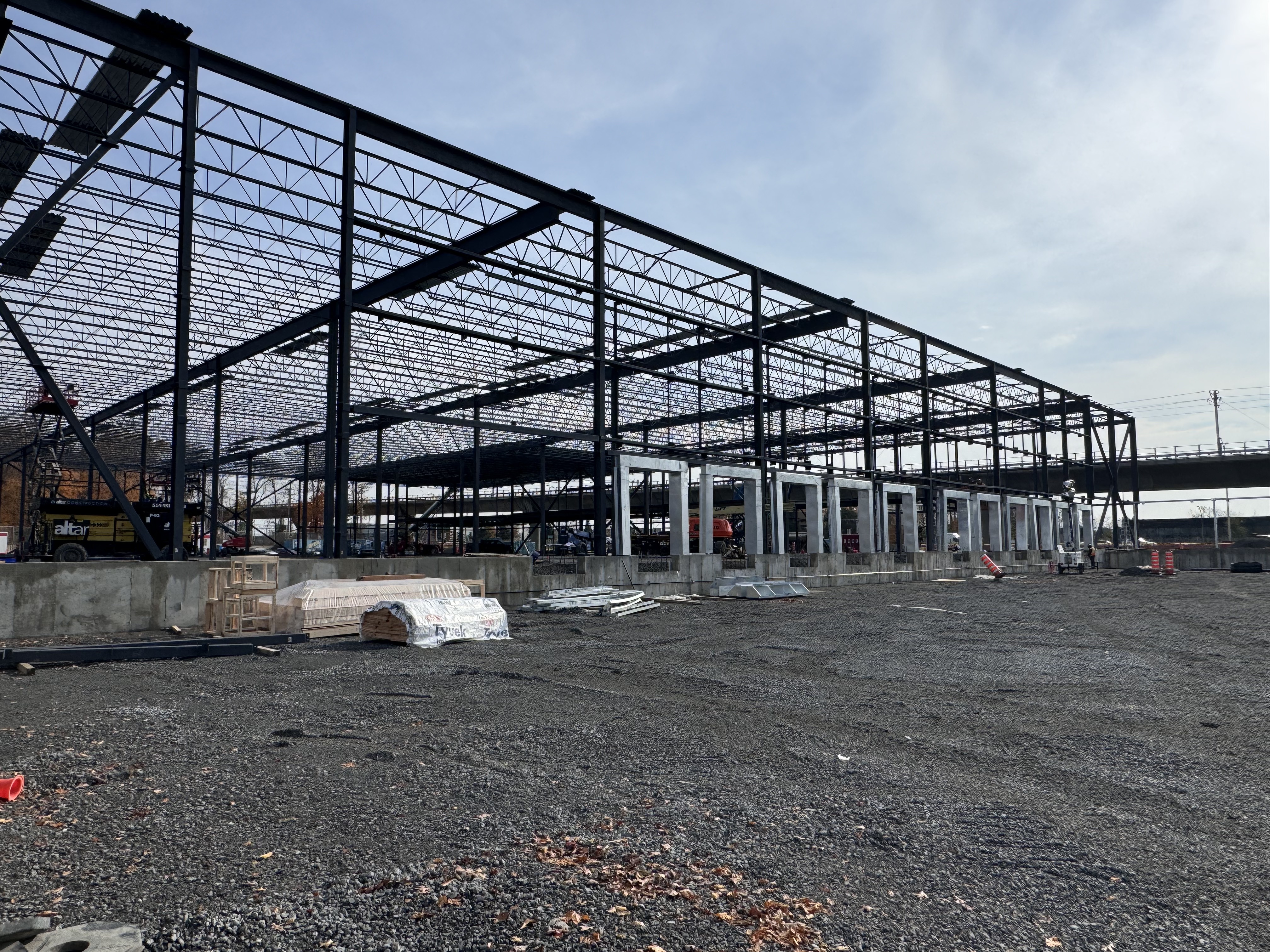

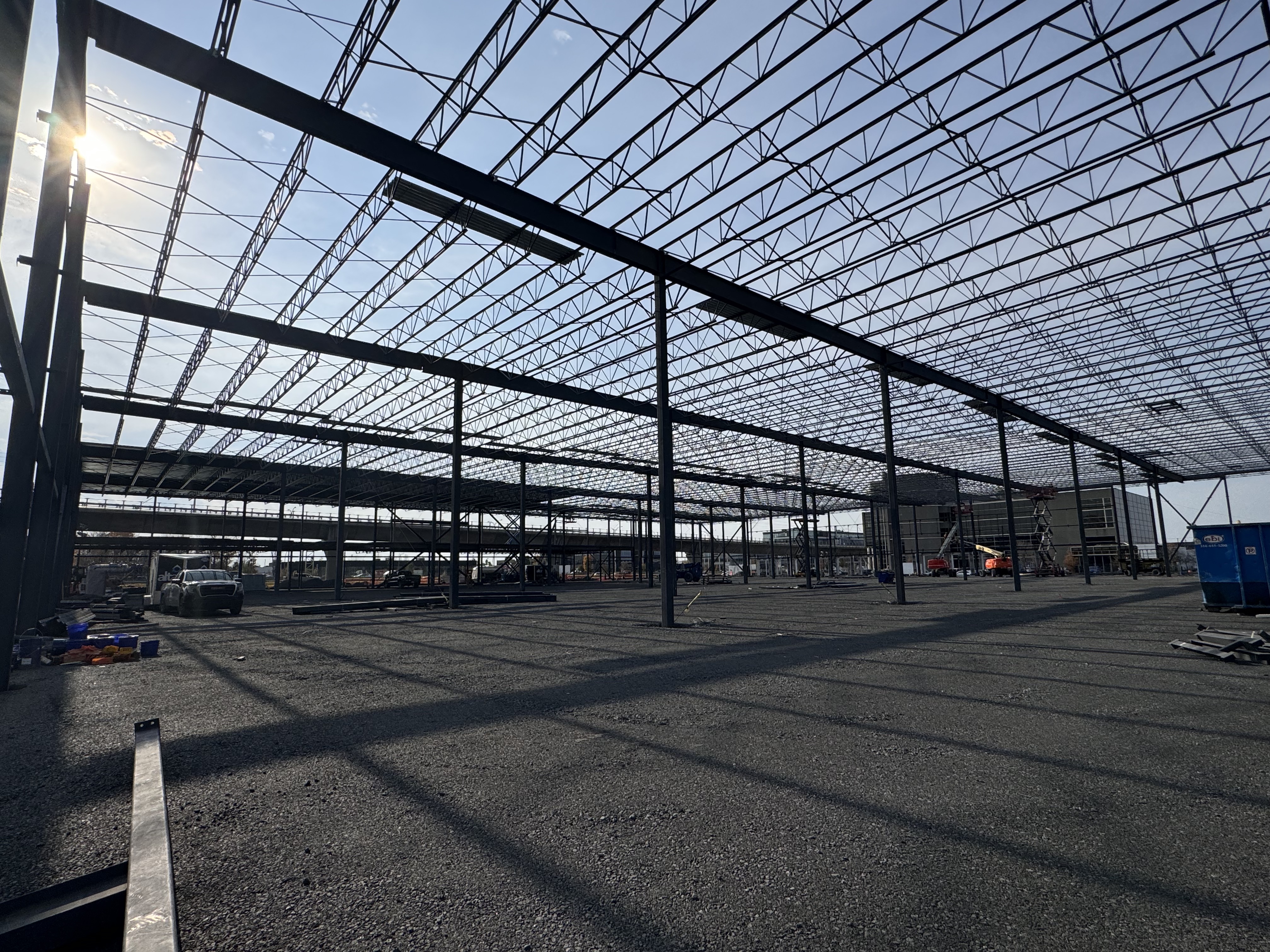
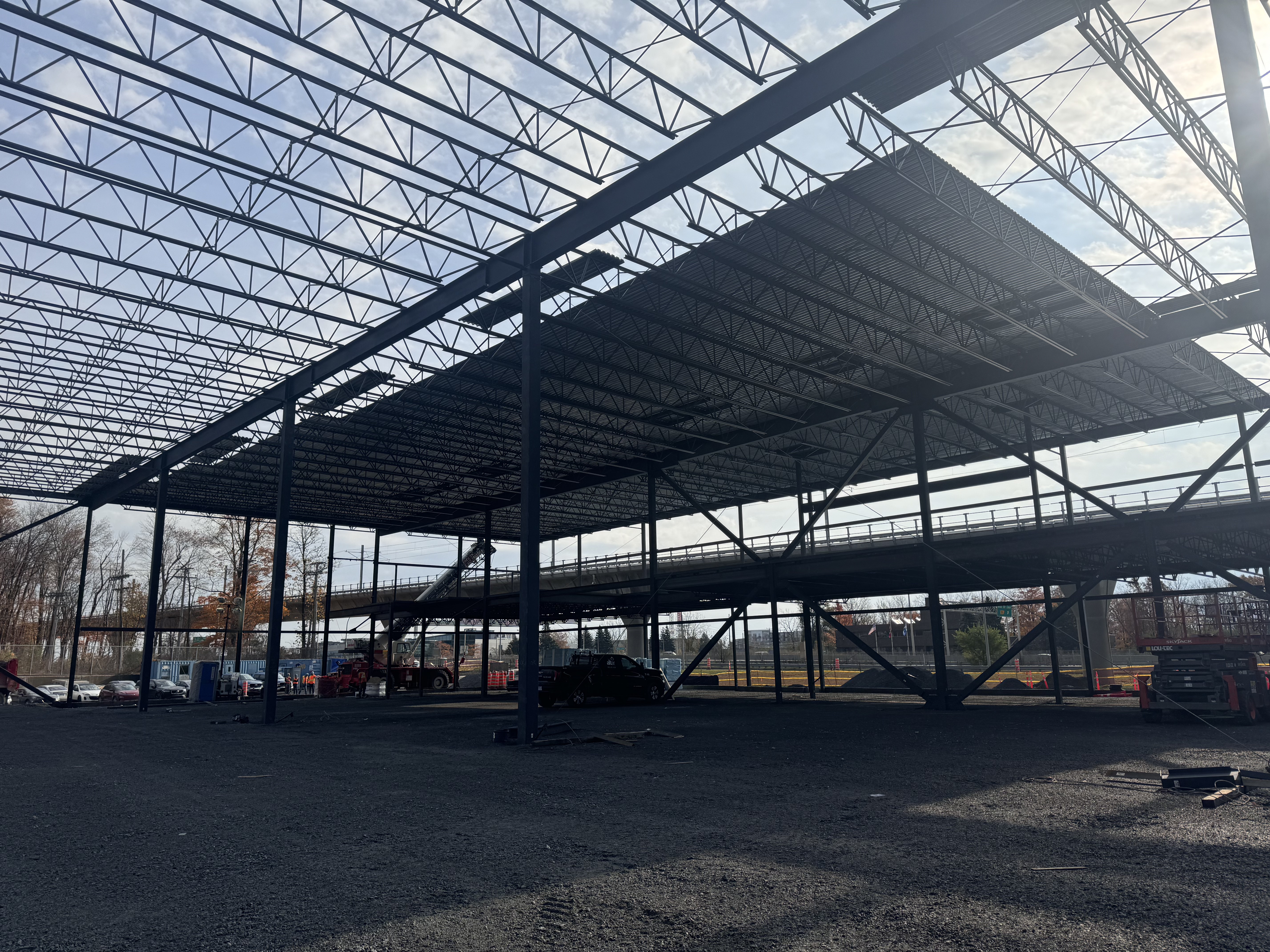
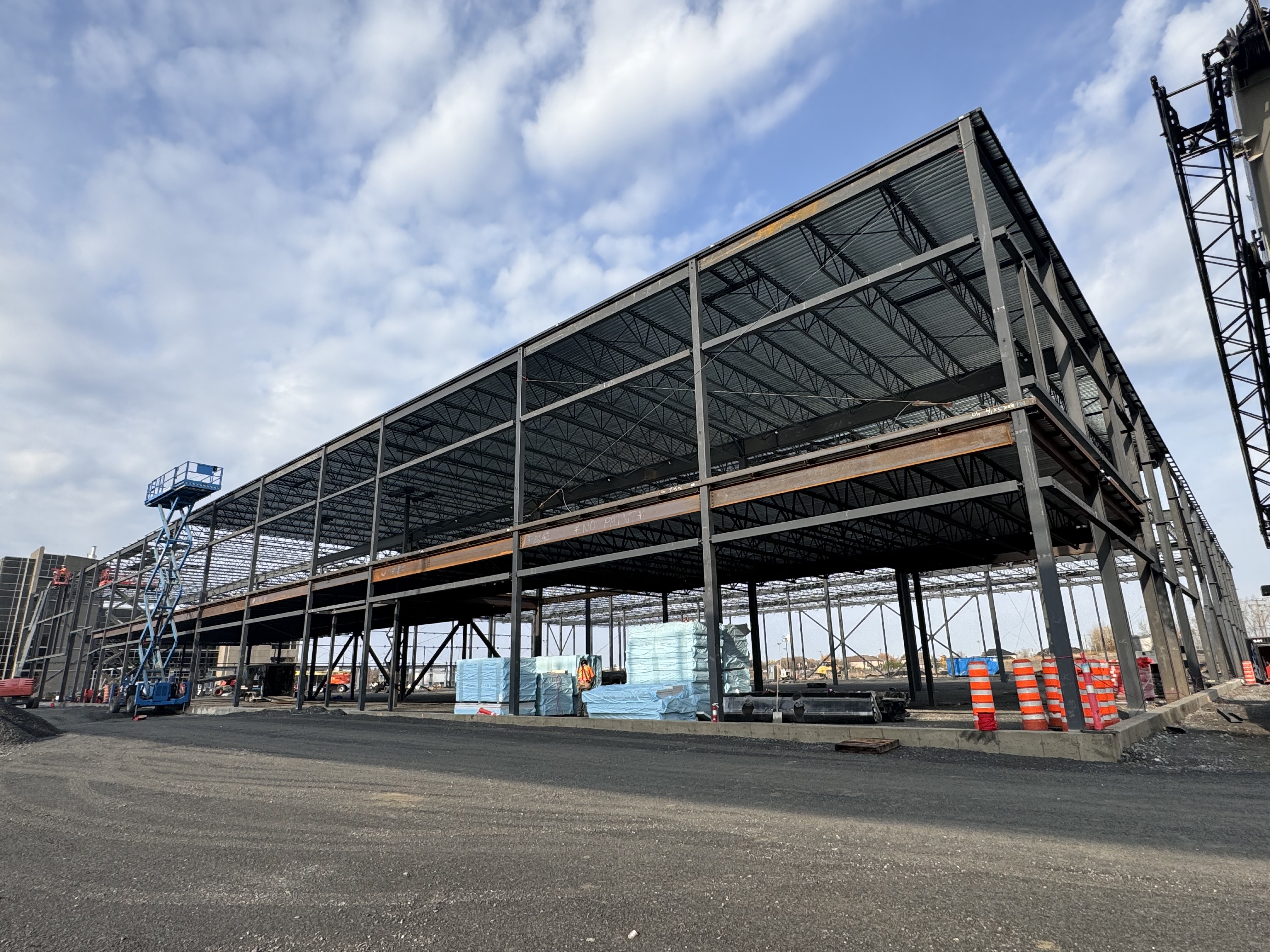
Canac’s new distribution center required the extension of an existing facility to accommodate a 600,000 ft² warehouse with a clear height of 36’-6’’ and a two‑story 50,000 ft² administration block. The warehouse integrates multiple storage systems, including conventional and cant‑leg racking, an Autostore system, and specialized compounds for flammable and explosive materials. To maximize efficiency, the building was divided into seven structurally independent blocks, with bracing strategically located above 56 loading dock doors to optimize servicing capacity. The slab on grade was engineered to resist high seismic loads and meet strict levelness tolerances, ensuring the long‑term performance of the Autostore system.
The design process was led by Genipro, with SBSA and the consulting team collaborating closely with Canac to define project needs. Bi‑weekly design meetings and BIM coordination sessions ensured alignment with the client’s vision, while breakout meetings with storage system suppliers allowed their requirements to be integrated seamlessly. During construction, SBSA worked alongside Canac’s construction department, acting as General Contractor, and specialized subcontractors Marlow and Canam. Regular site visits and coordination meetings fostered quality control, timeline management, and effective troubleshooting, while consistent team personnel cultivated a collaborative environment that enabled targeted value engineering and smooth resolution of challenges.
Schedule and budget management were critical to success. Structural steel procurement and foundation work before winter were identified as key risks, placing structural design on the critical path. Excavation and concrete foundations were completed within two months, avoiding seasonal delays. SBSA supported Canac’s project management team with accurate material quantities extracted from BIM models and ongoing value engineering to align costs with budget expectations.
Several challenges required innovative solutions. The slab on grade design was complicated by increased seismic loads under NBCC, leading to collaboration with steel fiber suppliers and strategic sawcut placement. Integrating the Autostore system demanded suspended ceilings, firefighter platforms, fall arrest systems, and strict slab tolerances. Building adjacent to an existing structure required carefully calculated expansion joints and shared foundations to ensure independent movement and protect the existing facility. Risks were mitigated through strict coordination, custom slab specifications, and early BIM modeling to avoid conflicts with mechanical systems and racking.
The result was a highly complex yet efficiently delivered facility that balanced technical innovation, sustainability, and operational performance, positioning Canac’s distribution network for long‑term success.